How to Say Goodbye in Korean: 8 Phrases and Who Each One Is For
The Goodbye That Splits in Two
Most guides on how to say goodbye in Korean hand you 안녕히 가세요 and stop there. That is how people end up saying it to a shopkeeper while walking out of the shop, which is wrong.
Korean splits goodbye by who is moving. One phrase means "go well" and one means "stay well", and you pick based on whether you are the one leaving or the one staying put.
On top of that, every version comes in three politeness levels, and the casual one you learned from a drama is the one that will embarrass you in front of someone older.
Below are eight expressions, ordered from the safest to the most restricted, each with the person you can say it to.
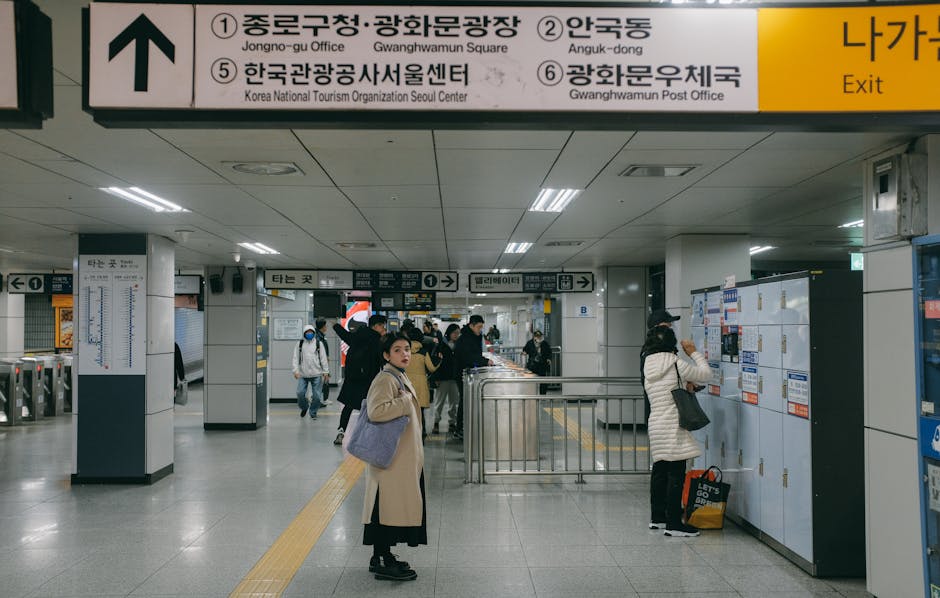
| Situation | Saying goodbye when parting with someone |
|---|---|
| How much politeness matters | High - the phrase changes with who is leaving and with the age or rank gap |
| Safe default | 안녕히 가세요 (annyeonghi gaseyo) - say it to the person who is walking away |
If You Only Remember One
If you are the one staying and they are leaving: 안녕히 가세요 (annyeonghi gaseyo).
If you are the one leaving and they are staying: 안녕히 계세요 (annyeonghi gyeseyo).
Both are polite enough for a stranger, a shop, a colleague, or your partner's parents. If you only remember one thing today, remember that leaving the shop means you say 안녕히 계세요, not 가세요.
The Expressions, and Who Each One Is For
Jump to a phrase
- 안녕히 가세요 — annyeonghi gaseyo (literally: go in peace)
- 안녕히 계세요 — annyeonghi gyeseyo (literally: stay in peace)
- 안녕히 가십시오 / 안녕히 계십시오 — annyeonghi gasipsio / annyeonghi gyesipsio
- 들어가세요 — deureogaseyo (literally: go inside)
- 조심히 가세요 — josimhi gaseyo (literally: go carefully)
- 다음에 또 봬요 — daeume tto bwaeyo (literally: let's see each other again next time)
- 잘 가 — jal ga (literally: go well)
- 안녕 — annyeong (literally: peace)
1. 안녕히 가세요
annyeonghi gaseyo (literally: go in peace)
The standard polite goodbye said to the person who is leaving. You stay, they go.
This is the version to use with strangers, shop staff, colleagues, and anyone older than you. It is polite without being stiff, so it works in nearly every everyday situation.
If you are hosting, seeing someone out, or standing behind a counter, this is your phrase.
⚠️ Watch out — The trap is using it while you are the one walking out. Saying 안녕히 가세요 as you leave a café tells the staff to go away, which is why it gets a confused look rather than a correction.
2. 안녕히 계세요
annyeonghi gyeseyo (literally: stay in peace)
The mirror of the phrase above, said when you are the one leaving and the other person stays.
Same politeness level, same range of people: strangers, staff, colleagues, elders. Leaving a shop, an office, or someone's home, this is the correct one.
Memorising the pair as "가 = go, 계 = stay" is the fastest way to stop mixing them up, because 가다 (gada) means to go and 계시다 (gyesida) is the honorific form of to stay.
⚠️ Watch out — Do not use it when you are both leaving at the same time - stepping out of a restaurant together, neither of you is staying, so this lands oddly. Use 들어가세요 or a casual phrase instead.
3. 안녕히 가십시오 / 안녕히 계십시오
annyeonghi gasipsio / annyeonghi gyesipsio
The formal-polite versions of the same two phrases, using the -십시오 ending.
You will hear these in announcements, from hotel and airline staff, in the military, and in formal business settings. They are correct but noticeably ceremonial.
As a learner you mostly need to recognise them rather than produce them, although using one with a much older person or a very senior figure is never a mistake.
⚠️ Watch out — In an ordinary social setting this can sound like you are addressing a customer rather than a person. With a friend's parents, the -세요 version is warmer and equally respectful.
4. 들어가세요
deureogaseyo (literally: go inside)
An extremely common goodbye that textbooks underuse. It means "get home safe" more than "go inside", and it is what many people actually say at the end of a call or when parting on the street.
Polite and warm at the same time. Safe with colleagues, neighbours, older people, and anyone you are on polite terms with.
On the phone it is close to a default: many calls end with 들어가세요 rather than 안녕히 계세요.
⚠️ Watch out — It assumes the other person is heading home or inside. Saying it to someone who has just told you they are going back to the office is slightly off, though nobody will be offended.
5. 조심히 가세요
josimhi gaseyo (literally: go carefully)
"Get there safely." Used when someone is heading off, especially late at night, in bad weather, or on a long trip.
Polite, and it carries genuine care rather than routine, so it is a good addition when you want the goodbye to feel less transactional.
Often stacked with the standard phrase: 안녕히 가세요, 조심히 가세요.
⚠️ Watch out — There is no real trap here - it is safe with almost anyone. Just note it only works toward the person leaving, never toward the one staying.
6. 다음에 또 봬요
daeume tto bwaeyo (literally: let's see each other again next time)
"See you again." Polite but friendly, and it signals that you expect to meet again.
Good with colleagues you like, classmates, someone you have just been introduced to and got on with. It softens a goodbye that would otherwise sound like the end of a transaction.
봬요 (bwaeyo) is the honorific form of 보다 (to see), so the respect is built into the verb.
⚠️ Watch out — Avoid it with someone you have no intention of meeting again - in Korean this reads as a real statement about the future rather than the empty pleasantry "see you around" is in English.
7. 잘 가
jal ga (literally: go well)
The casual version of 안녕히 가세요, said to the person leaving.
Use it only with close friends your own age or younger, or with someone who has explicitly told you to speak casually (말 놓다, mal notda).
Its pair for when you are the one leaving is 잘 있어 (jal isseo), "stay well".
⚠️ Watch out — This is the drama trap. Saying 잘 가 to a colleague who is five years older, or to a shop assistant, is genuinely rude - not playfully casual. Wait until the other person drops the polite endings first.
8. 안녕
annyeong (literally: peace)
The one-word casual goodbye, and also a casual hello. Same word both ways.
Only for close friends, children, or people clearly younger than you in an informal setting. It is light and quick, which is exactly why it does not fit a formal parting.
Among friends it often replaces every other phrase on this list.
⚠️ Watch out — Never use it with a teacher, a boss, a customer, or anyone's parents. The politeness gap between 안녕 and 안녕히 가세요 is much larger than the shared 안녕 makes it look.
 ## How It Sounds in Real Life
Leaving a convenience store (you leave, staff stays)
You: 안녕히 계세요 (annyeonghi gyeseyo) - Goodbye (stay well)
Staff: 안녕히 가세요 (annyeonghi gaseyo) - Goodbye (go well)
Ending a phone call with an older colleague
Colleague: 그럼 내일 봬요 (geureom naeil bwaeyo) - See you tomorrow, then
You: 네, 들어가세요 (ne, deureogaseyo) - Yes, get home safe
Parting from a friend your own age at night
Friend: 나 먼저 갈게 (na meonjeo galge) - I'll head off first
You: 어, 잘 가. 조심히 가 (eo, jal ga. josimhi ga) - Okay, bye. Get home safe
Leaving your partner's parents' home
You: 안녕히 계세요. 다음에 또 봬요 (annyeonghi gyeseyo. daeume tto bwaeyo) - Goodbye, and see you again
Parent: 조심히 가세요 (josimhi gaseyo) - Get home safely
Which One Do I Pick?
- Decide who is moving before you open your mouth: if they walk away, 안녕히 가세요; if you walk away, 안녕히 계세요.
- If both of you are leaving at the same time, skip the pair entirely and use 들어가세요 or 조심히 가세요.
- With anyone older, senior at work, or a stranger, stay on the -세요 forms. There is no situation where they are too polite.
- On the phone, 들어가세요 is the natural closer with people you are on polite terms with.
- Add 조심히 가세요 when it is late, raining, or the person has a long journey - it does real work rather than being decoration.
- Only use 잘 가 or 안녕 after the other person has started speaking casually to you first.
Mistakes That Give You Away
- Do not say 안녕히 가세요 as you walk out of a shop or office. You are the one going, so it has to be 안녕히 계세요.
- Do not use 안녕 as a general-purpose goodbye because it is easy to remember. With anyone older or in any workplace it reads as rude, not friendly.
- Do not translate "see you later" as 나중에 봐요 with someone senior. 다음에 또 봬요 is the version that carries the respect.
- Do not say 잘 가 to a colleague just because you are the same age - workplace relationships usually stay on polite endings until someone proposes otherwise.
- Do not stack honorific goodbyes to be extra safe (안녕히 가십시오 to a friend's mother). It sounds like customer service, which puts distance where you wanted warmth.

What Learners Get Wrong
"안녕 means goodbye, so the polite version must just be 안녕하세요."
안녕하세요 is a greeting, not a farewell. The polite goodbyes are 안녕히 가세요 and 안녕히 계세요, and mixing them up means saying hello as you leave.
"안녕히 가세요 is the universal polite goodbye."
It only fits when the other person is the one leaving. Roughly half the time - every time you are the one walking out - the correct phrase is 안녕히 계세요.
"If we are the same age, casual speech is fine."
Age is one factor; setting is another. In many workplaces colleagues of the same age keep polite endings indefinitely, and switching first is what looks presumptuous.
"Korean goodbyes work like English ones, so 'see you later' is a safe throwaway line."
다음에 또 봬요 is heard as an actual expectation of meeting again. If you do not mean it, a plain 안녕히 가세요 is the neutral option.
Why Korean Has So Many Ways to Say This
English handles politeness mostly with tone and word choice: "bye", "goodbye", "have a good evening" all share the same grammar and you soften them with your voice. Korean does it in the verb ending, which means the respect level is locked into the sentence itself and cannot be adjusted by sounding friendly.
That is why one situation produces so many phrases. 가 / 가요 / 가세요 / 가십시오 are the same verb at four different speech levels, and each one encodes a different relationship. Choosing the wrong ending is not a tone problem you can smile your way out of - it states, grammatically, what you think the relationship is.
The second axis is unique to farewells. Korean marks direction: 가다 (to go) for the person leaving, 계시다 (the honorific of to stay) for the person remaining. English lets one word cover both, so learners reach for one phrase and use it in both directions. Once you hear the 가 / 계 contrast, this stops being memorisation and becomes a question you can answer in half a second: who is moving?
Put the two axes together and you can generate the right goodbye for a situation nobody taught you. Pick the direction, then pick the ending that matches the relationship, and you will land close enough that no one notices you are a learner.
Related Guides
What You Will Need Next
- how to say see you later in korean
- how to say thank you in korean
- when to use casual speech in korean
Answer one question before you speak: who is walking away? If it is them, 안녕히 가세요. If it is you, 안녕히 계세요. Keep both on the -세요 level until the other person makes the first move toward casual speech, and you will never get a Korean goodbye wrong in a way that matters.


댓글
댓글 쓰기